The Thrift Store: Curated Resale Storefront
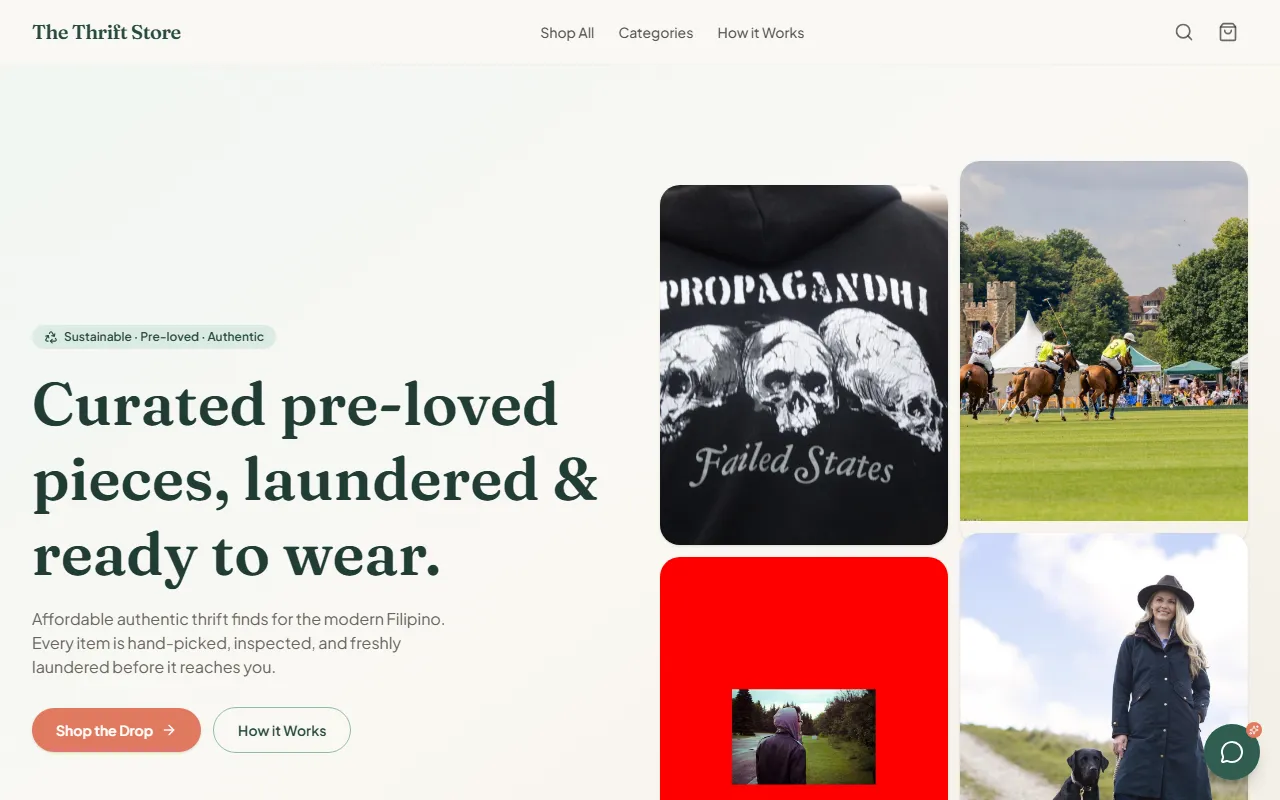
Responsive resale storefront built around one-of-one inventory, visible garment condition and a shorter path from browsing to purchase.
- E-commerce
- Front-end developer, storefront architecture and interface
- Commerce
- Deployed
What problem does The Thrift Store solve?
Resale inventory breaks the assumptions behind ordinary e-commerce templates. Most pieces are single units, sizes do not repeat, and garment condition matters more than a variant selector that can only offer one choice.
How does The Thrift Store work?
The storefront treats one-of-one stock as the default. Category browsing accepts a catalogue that changes constantly, while product pages put condition and detail photography before the purchase decision.
Which architecture decisions shaped the build?
- Single-unit inventory as the default assumption
- Variant pickers on one-of-one stock add a step that can only ever have one answer. Removing them shortened the path to checkout.
- Condition treated as primary product information
- It is the deciding factor in resale and the most common reason for a return, so it belongs above the fold rather than in a specification table.
Field notes from the build
Resale carries a different inventory model from ordinary retail. Each piece may appear once and disappear for good. A standard product template adds controls the catalogue cannot use and buries the information the buyer actually needs.
One item means one clear decision
When only one size exists, the page has no reason to ask the buyer to select it. Removing that step shortens the path to purchase and leaves less room for confusion.
Condition carries the weight
Condition decides the sale and often decides the return. It sits near the top of the product page beside the photographs that support the claim.
Evidence in the build
Commerce design shaped by the inventory itself, with a responsive component system that stays manageable as the catalogue turns over.